The Verdict on Nuclear Energy: Who Killed the Future?
A fifty-year case study in how organized fear defeated evidence — and what it cost us

In 1974, France faced an energy crisis. Oil prices had quadrupled overnight after the Arab embargo, and the country imported nearly all of its fossil fuels. Prime Minister Pierre Messmer made a decision that would define French energy policy for the next half century: France would go nuclear, comprehensively and without apology. The Messmer Programme commissioned 56 nuclear reactors in fifteen years. By the 1990s, France generated roughly 75 percent of its electricity from nuclear power — cleanly, reliably, safely and cheaply. French households today pay among the lowest electricity rates in Western Europe. France’s per capita carbon emissions from electricity generation are a fraction of Germany’s, Britain’s, or the United States’.
France did not discover some secret technology unavailable to other nations. It simply made a rational decision and executed it. The question that haunts the next fifty years of energy history is: why didn’t everyone else?
The answer is not complicated, though it is uncomfortable. A movement built on fear rather than evidence, sustained by organizational self-interest rather than scientific inquiry, and amplified by some of the most prestigious environmental institutions in the world for decades have successfully blocked the global deployment of the safest, cleanest, and — where not politically sabotaged — most affordable large-scale energy technology ever developed. The cost of their success — measured in premature deaths, accumulated carbon, avoidable climate damage, and needlessly high electricity bills — is among the largest self-inflicted wounds in modern history.
What Could Have Been
The United States government was not timid about nuclear energy’s potential. In the 1960s, federal officials projected 1,000 commercial reactors operating in the United States by the year 2000. That figure was not fantasy — it was a straight-line extrapolation from the build rate already underway. At peak, 112 reactors operated in the US. Today there are 94, many of them aging. The gap between 1,000 and 94 is not a gap in engineering capability. It is a gap created by politics.
Had the United States followed France’s trajectory — deploying nuclear at scale through the 1970s, 1980s, and 1990s — the consequences across three dimensions would have been transformative. (1) coal, which powered roughly half of American electricity generation through much of this period, would have been displaced decades earlier, eliminating billions of tons of carbon emissions and hundreds of thousands of annual pollution deaths. (2) natural gas, marketed as a “clean” transition fuel, would never have achieved the market dominance it holds today. (3) and electricity — the foundational input to every modern economy — would have been dramatically cheaper, with compounding benefits across industry, household budgets, and economic competitiveness. We could have embarked on the electrification of dirty fossil-based industrial and transportation processes far earlier.
The starkest real-world illustration of what nuclear suppression produced is the comparison between France and Germany — two wealthy, technologically sophisticated Western European nations that made opposite choices.
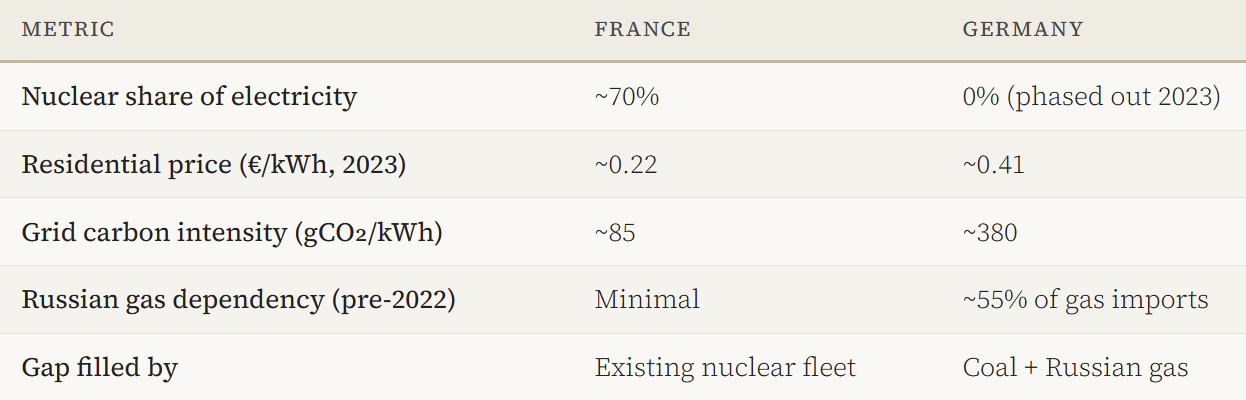
Table 1: France vs. Germany — The Cost of Opposite Choices
Germany’s Energiewende — advertised by environmentalists as a visionary transition to renewables — produced some of the highest residential electricity prices in Europe, among the highest carbon intensities in Western Europe, and a strategic dependency on Vladimir Putin’s gas pipelines that became a national security catastrophe after February 2022. France, next door, faced none of these problems. The difference between them is not technology, wealth, or engineering talent. It is a fifty-year policy choice.
Had the world followed France’s lead, the International Energy Agency’s own modeling suggests that deep decarbonization of electricity generation was achievable by the 1990s — thirty years before the targets being desperately negotiated today. The climate conversations we are having in 2026 might not have been necessary at all.
The Safest Energy Source Ever Built
The foundational claim of the anti-nuclear movement — that nuclear power is uniquely and unacceptably dangerous — is not supported by evidence. It never was.
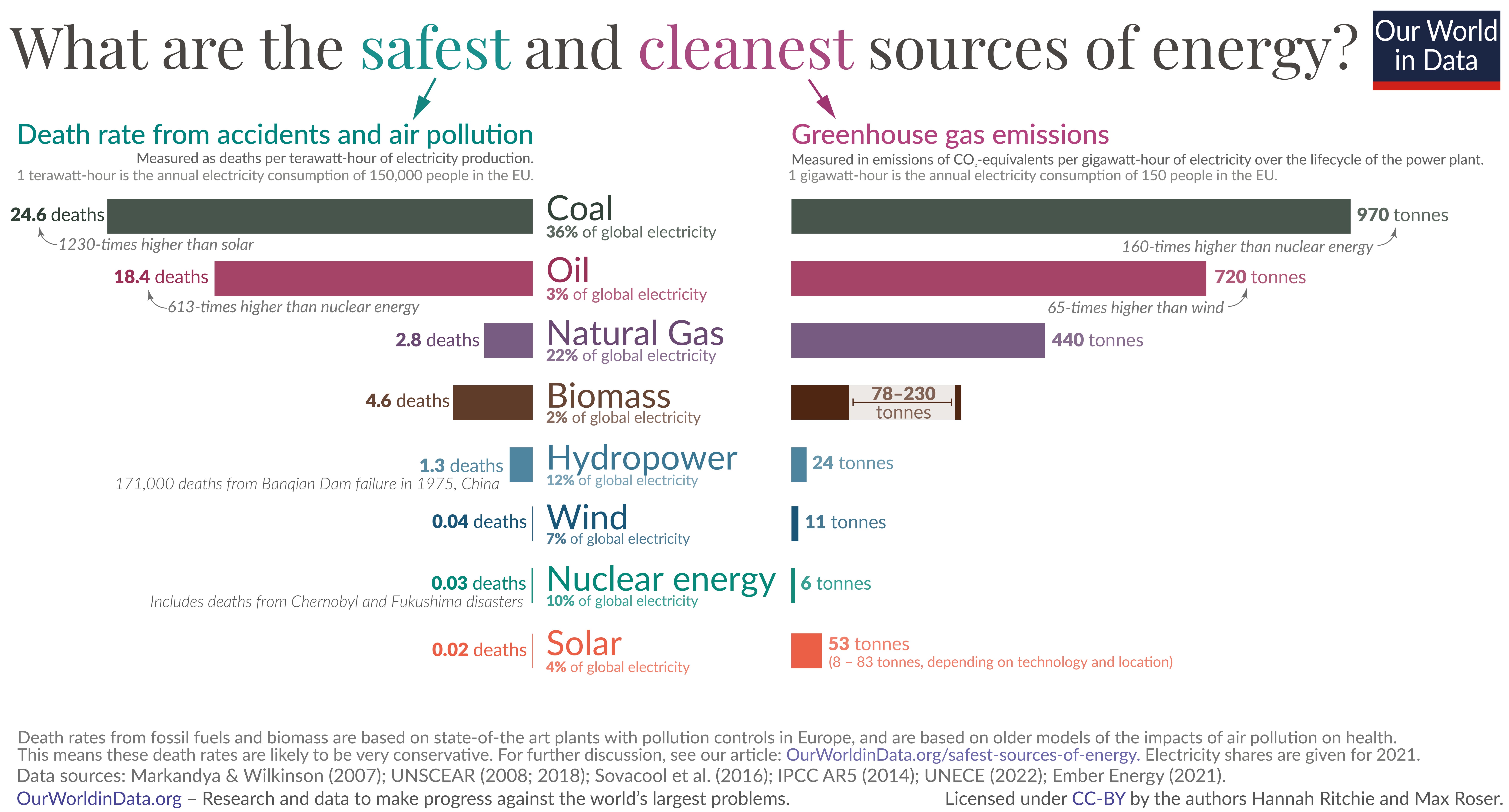
Figure 1: Energy Safety and Emissions
Source: Our World in Data, drawing on Markandya & Wilkinson (Lancet, 2007), UNSCEAR (2008, 2018), Sovacool et al. (2016), IPCC AR5 (2014). Note: Death rates for fossil fuels are based on state-of-the-art plants with pollution controls — meaning these figures are conservative underestimates of actual mortality.
The data tells a story that should have ended the debate decades ago. Nuclear energy kills 0.03 people per terawatt-hour of electricity produced — a figure that already incorporates the full death tolls of both Chernobyl and Fukushima, the two worst nuclear accidents in history. Nuclear is not slightly safer than fossil fuels. It is between 80 and 800 times safer, depending on the comparison. On carbon, nuclear produces 6 tonnes of CO₂-equivalent per gigawatt-hour over its full lifecycle — 160 times cleaner than coal, and lower than solar on a median basis.
The trifecta is remarkable: nuclear is simultaneously the safest, among the cleanest, and — as we will see — inherently one of the most affordable sources of large-scale electricity generation ever demonstrated. The anti-nuclear movement attacked on the dimension of safety. When that argument weakened, it pivoted to cost. What the record shows is that the cost problem, like the safety problem before it, was substantially a creation of the environmental movement itself.
James Hansen — NASA’s foremost climate scientist and the man who first testified before Congress about the dangers of climate change in 1988 — co-authored a peer-reviewed study in Environmental Science and Technology estimating that nuclear power saved approximately 1.8 million lives between 1971 and 2009 by displacing fossil fuel generation. His forward projection: expanding nuclear could prevent between 420,000 and 7 million additional deaths by midcentury. Hansen has been explicit for years: there is no credible path to climate stabilization that does not include a major role for nuclear power.
This data was not hidden. The mortality differentials between nuclear and coal were documented in academic literature from the 1970s onward. The environmental movement that opposed nuclear power did so in possession of, or with ready access to, the evidence that contradicted its central claims.
The Cost That Wasn’t Inevitable
Critics of nuclear energy have long pointed to its cost as a disqualifying flaw. The argument deserves engagement — but with precision about what actually happened to nuclear construction costs, where, and why.
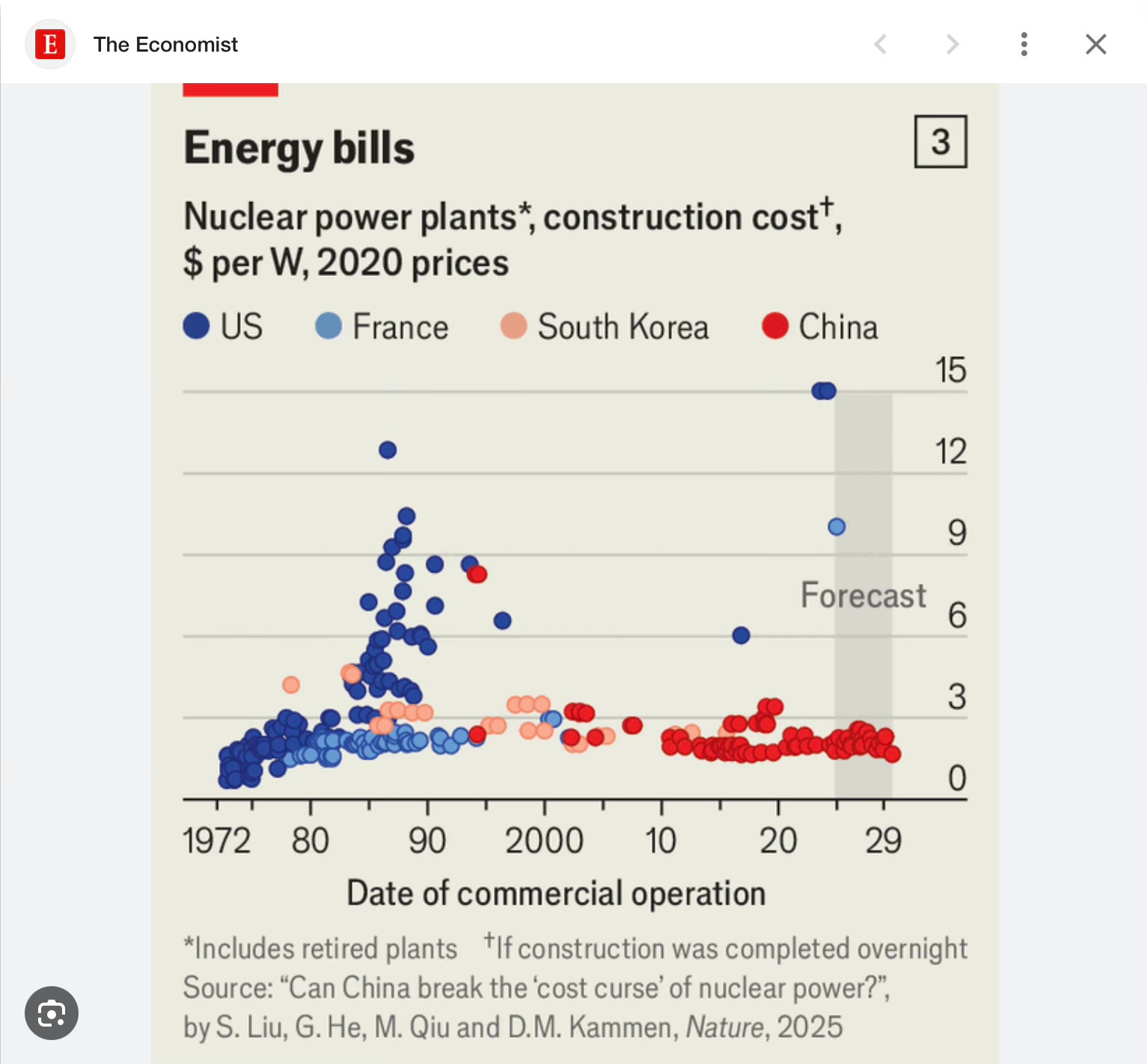
Figure 2: Nuclear Power Plant Construction Costs
Source: Liu, S., He, G., Qiu, M. & Kammen, D.M. “Can China break the ‘cost curse’ of nuclear power?” Nature, 2025. Via The Economist.
The chart above is one of the most important pieces of evidence in the nuclear debate, and it has received far less attention than it deserves. It shows the construction cost per watt of nuclear plants by country and date of commercial operation, in inflation-adjusted 2020 dollars. The pattern it reveals is unambiguous and damning.
In the United States, nuclear construction costs were low and stable through the 1960s and early 1970s — under $1 per watt in today’s dollars for the earliest plants. Then, beginning in the mid-1970s and accelerating through the 1980s, costs exploded. By the late 1980s, American nuclear plants were costing $8–12 per watt. Recent projects have reached $14–15 per watt. The trajectory is not a gentle upward drift. It is a near-vertical line.
Now look at South Korea and China. South Korean plants have maintained construction costs of roughly $2–3 per watt consistently from the 1970s through the present. Chinese plants, building at scale through the 2010s and 2020s, are coming in at $1.50–2.50 per watt — comparable to what the United States was achieving in the 1960s, before the regulatory explosion. The forecast band for Chinese plants through 2029 shows no sign of cost escalation.
The technology is identical in its fundamentals. The physics does not change by geography. What changed in the United States — and to a lesser extent in Western Europe — was the regulatory environment, driven overwhelmingly by anti-nuclear advocacy.
The mechanism was systematic. Legal challenges to plant licenses, mid-construction design modifications, and NRC rule changes driven by political rather than engineering considerations each added time and cost to projects already underway. In nuclear construction, time is money in an unusually direct sense: a plant under construction is an enormous capital investment generating zero revenue. Plants that broke ground with one cost estimate were completed — if they were completed at all — at multiples of that figure.
South Korea illustrates what rational conditions produce. Building a standardized fleet under consistent designs and stable regulatory oversight, workers and engineers moved from project to project accumulating expertise. Costs stayed low not because South Korea found a technological shortcut, but because it never destroyed the institutional continuity that makes complex industrial projects executable. The United States did destroy it. By the time America attempted to build new plants in the 2010s — the Vogtle project in Georgia being the most prominent example — the knowledge base had been so thoroughly dismantled that the industry was effectively starting from scratch.
The cost argument against nuclear in the West is real. But it is not an argument against nuclear power. It is an argument against what sustained political opposition does to any complex industrial system when it succeeds in weaponizing regulation as a tool of obstruction. South Korea and China demonstrate that the underlying technology, built under rational conditions, remains affordable. The West made it expensive. That was a choice, not an inevitability.
The Fossil Fuel Industry: A Minor and Largely Early Player
It is tempting to assign sustained responsibility to the fossil fuel industry for nuclear energy’s suppression. The temptation should be resisted — it is an oversimplification that inadvertently softens the indictment of those most responsible.
The documented cases are few and temporally concentrated. In 1969, Atlantic Richfield gave the founding donation to Friends of the Earth, an organization established with explicit anti-nuclear positions. In the 1970s, the Oil Heat Industry ran print advertisements opposing a single plant - the Shoreham Nuclear Power Station - under the slogan “Solar, Not Nuclear.” Decades later, the American Petroleum Institute organized a “No Nuclear Bailouts” campaign against a single Pennsylvania subsidy bill — targeting a single state legislature.
For the thirty-five years in between — the period that produced the reactor cancellations, the regulatory cost explosion, the plant closures, Germany's Energiewende, and the campaigns against San Onofre and Diablo Canyon — the public record contains no documented fossil fuel anti-nuclear campaign of any material scale. No sustained public messaging campaign targeting nuclear has been identified. Whatever behind-the-scenes activity may have occurred, the industry had no need to show up visibly — the environmental movement was doing the work more effectively, and with far greater public credibility, than any oil company could have managed.
The environmental movement needed no encouragement. The Sierra Club, NRDC, Greenpeace, and Friends of the Earth maintained dedicated full-time anti-nuclear staffs, funded and coordinated state ballot initiatives, intervened in federal licensing proceedings, filed serial litigation to delay and escalate the cost of construction, lobbied Congress and state legislatures, and ran sustained public communications campaigns that kept radiation fear alive in the popular imagination for decades.
These were not ad hoc efforts — they were institutionalized, donor-funded, professionally executed programs that spanned generations of staff and leadership. The contrast with the fossil fuel industry's anti-nuclear footprint is not subtle. One side showed up every day for fifty years. The other sent a check in 1969, ran a local ad campaign in the 1970s, and largely went home. The fossil fuel industry was a passive beneficiary of a campaign it did not need to run. The environmental movement ran it for free.
The Environmental Movement: A Self-Sustaining Machine of Opposition
The more consequential story belongs to the environmental movement itself.
The origins of organized anti-nuclear environmentalism are traceable to the mid-1960s, when a faction within the Sierra Club, led by David Brower, pivoted from conservation advocacy to opposition against all forms of cheap, reliable energy. The logic, remarkable in retrospect, was that abundant energy would fuel economic growth and population expansion threatening natural landscapes. Nuclear power’s promise of essentially limitless, clean, affordable electricity was precisely what Brower feared. The Sierra Club reversed its previously pro-nuclear position. Other organizations followed.
This ideological turn was dramatically amplified by two events in 1979: the partial meltdown at Three Mile Island — which killed no one and injured no one — and the release of the fictional film The China Syndrome twelve days earlier. A movement that had been building found suddenly that fear had done its organizing work. No deaths. No injuries. A contained accident at a facility that had operated safely for years. But the imagery was indelible, and the organizations knew how to use it.
Then came Chernobyl in 1986. The Soviet RBMK reactor — a fundamentally different design from Western reactors, lacking a containment structure, operated by a government with deep institutional incentives to suppress information — provided new ammunition. Opposition polling reached 70 percent among Americans. The environmental movement had achieved something remarkable: it had made the safest, cleanest, and inherently most affordable large-scale electricity source in the world synonymous with existential danger in the public mind. The regulatory consequences — the mid-construction redesigns, the license challenges, the NRC rule changes — then systematically manufactured the cost problem that became the movement’s second line of attack.
The most damning chapter is what happened next. As climate change moved to the center of environmental concern through the 1990s and 2000s, any honest accounting confronted an inescapable conclusion: displacing fossil fuels at the required scale required nuclear power. The following credentialed environmentalists and climate scientists reached that conclusion publicly and said so:
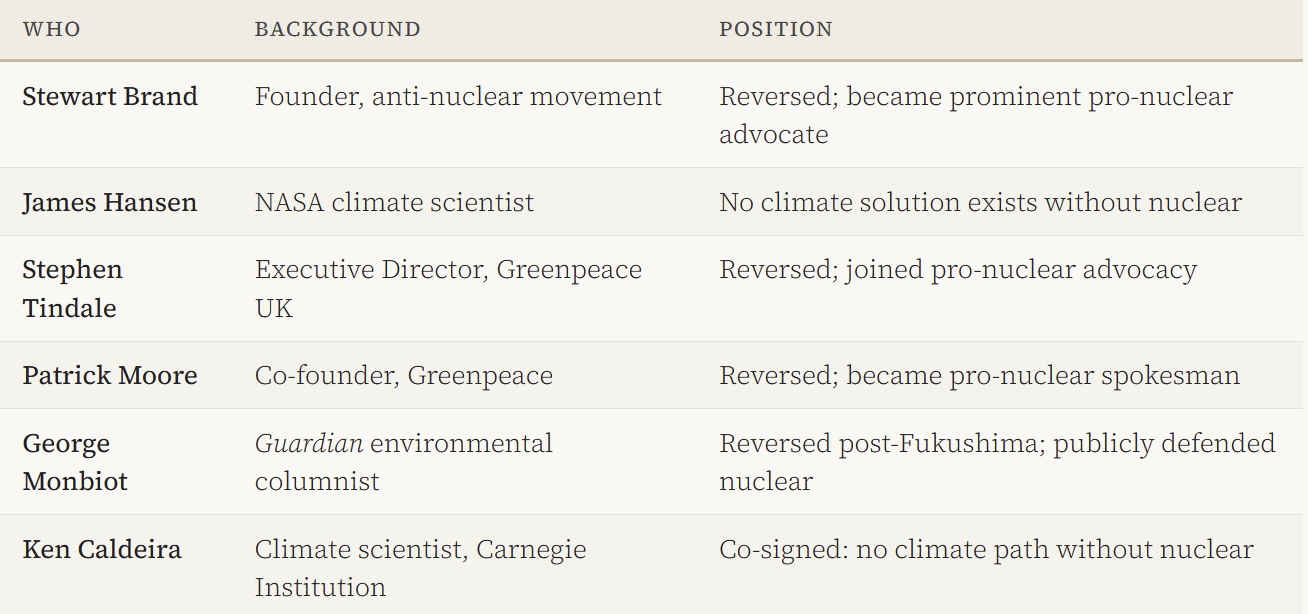
Table 2: Prominent Environmentalists Who Reversed on Nuclear
The mainstream organizations — Sierra Club, NRDC, Greenpeace, Friends of the Earth — did not follow. They had built fundraising operations, donor relationships, and political coalitions around anti-nuclear advocacy. Reversal was institutionally costly in a way that ideological consistency, however empirically wrong, was not. And so they maintained positions their own stated climate commitments had rendered intellectually indefensible — continuing to point to nuclear’s cost, even as that cost was substantially a product of their own prior interventions.
The consequences were concrete and measurable. When California’s San Onofre plant closed in 2013, natural gas generation increased to fill the gap and emissions rose. When Diablo Canyon — the state’s last nuclear plant — was targeted for closure, organizations declaring climate an emergency supported its shutdown, producing more gas, higher emissions, and higher electricity prices. In Germany, the nuclear phase-out was filled directly by coal and Russian gas. The pattern repeated across the Western world: wherever anti-nuclear environmentalism achieved political success, fossil fuels filled the gap, electricity became more expensive, and carbon emissions rose.
The movement that most loudly proclaimed its commitment to the planet’s future was, in measurable and documented outcomes, one of the fossil fuel industry’s most effective allies — without requiring the fossil fuel industry to do very much at all.
The Reckoning
The evidence across all three dimensions — safety, cleanliness, and cost — points in the same direction.
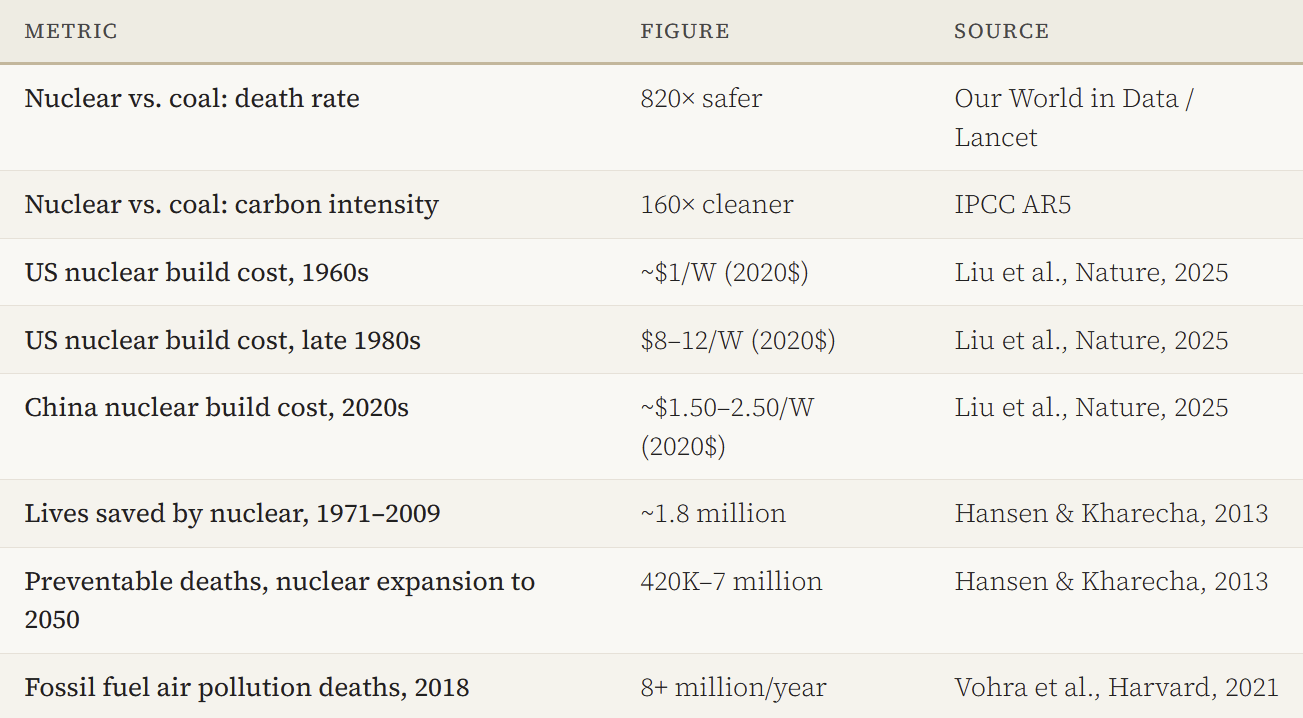
Table 3: The Evidence Across All Three Dimensions - safety, cleanliness and cost
Nuclear power was not made expensive because it is inherently expensive. It was made expensive in the West through a sustained campaign of regulatory intervention that destroyed the industrial continuity required to build anything complex at reasonable cost. South Korea and China — building the same technology under rational conditions — demonstrate what nuclear actually costs when politics is not weaponized against it.
A conservative accounting of lives lost to the fifty-year suppression of nuclear deployment — through the fossil fuel generation that replaced it, through the unnecessarily high electricity costs imposed on households and industries, and through the energy poverty in the developing world that cheap nuclear baseload could have addressed — runs to several million people. A full accounting runs considerably higher.
These are not abstractions. They are the measurable human cost of a political project sustained not by evidence but by institutional inertia, identity politics, and motivated reasoning — maintained long after the evidence on safety, cleanliness, and cost had all made the correct answer clear.
France showed what was possible. South Korea showed it again. China is showing it now. The reactors were buildable. The economics worked. The safety record was, and remains, extraordinary. The carbon case was unambiguous. What failed was not the technology. What failed was the political and intellectual culture of the institutions that claimed the mantle of planetary stewardship — and used it, for fifty years, to make the planet measurably more dangerous, more polluted, and more expensive.
References:
1. Kharecha, P.A. & Hansen, J.E. “Prevented Mortality and Greenhouse Gas Emissions from Historical and Projected Nuclear Power.” Environmental Science & Technology, 2013. doi:10.1021/es3051197
2. Vohra, K. et al. “Global Mortality from Outdoor Fine Particle Pollution Generated by Fossil Fuel Combustion.” Environmental Research, 2021. (Harvard University / University of Birmingham)
3. Ritchie, H. & Roser, M. “What are the safest and cleanest sources of energy?” Our World in Data, drawing on Markandya & Wilkinson, Lancet (2007); UNSCEAR (2008, 2018); Sovacool et al. (2016); IPCC AR5 (2014). OurWorldInData.org/safest-sources-of-energy
4. Liu, S., He, G., Qiu, M. & Kammen, D.M. “Can China break the ‘cost curse’ of nuclear power?” Nature, 2025. Via The Economist.
5. World Nuclear Association / Bisconti Research. Long-term US public opinion polling series on nuclear energy, 1983–2025.